Regenerative crops that nourish the land, feed our animals and support local food
systems.
Maris Wigeon
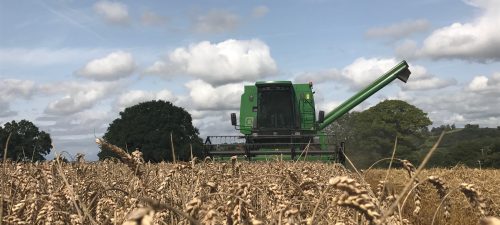
Maris Wigeon is a rare English Heritage Grain famously prized by roof thatchers for
its long straw which lasts many years. The long straw is favoured by organic farmers
like ourselves as it provides good competition for arable weeds and provides good
bedding for our cattle during the winter.
For every acre, Maris Wigeon typically yields less than half the amount of many
modern varieties but its quality and flavour are so fantastic it is highly sought
after by artisan flour mills. We work closely with a local mill and our flour is
sold to Hobbs House, a local bakery where it is turned into some delicious organic
sour dough.
Mascani Oats
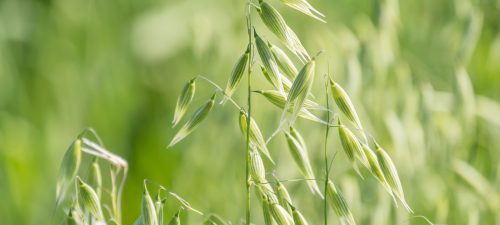
Mascani is the most widely grown winter oat in the UK. It’s a stiff-strawed variety
with excellent resistance to mildew and good resistance to crown rust, essential for
organic farmers with limited disease control options.
We grow oats primarily for their weed suppression benefits. Oats are allelopathic,
which means they secrete weed-growth inhibiting compounds from their roots. Their
tall stature creates a dense canopy that shades out competing weeds more effectively
than cereals like wheat or barley.
Our oats are used to feed our own cattle and they’re also milled to make
porridge oats and Duchy biscuits.
Maize
We grow Maize and harvest it as silage to feed to our cows. It is a high-energy
forage with good levels of starch. It has good intake characteristics, is high in
digestible fibre and increases overall forage intake when mixed with other forages
such as grass silage.
As maize has a poor soil coverage, we under-sow it with a herbal ley which helps to
maximise ground cover increasing soil health, reduces losses from run off and
erosion, suppresses the growth of weeds and regulates temperature at the soil
surface. Additionally, it also increases the number of beneficial insects for pest
control.
Companion Cropping
Regenerative practices for
resilient, living soil
A healthy thriving soil ecosystem soil is one of, if not the most important part of our
farm.
Companion cropping is a regenerative farming practice that involves growing different
crops together to support each other’s growth. By carefully pairing plants, we can
naturally deter pests, improve water retention, improve soil health, and boost yields.
We use a variety of cover crops, which protect and enrich the soil between main crops
over the winter months and provide a valuable feed source for our animals. We also under
sow, which is where secondary crops are sown beneath a primary crop to suppress weeds,
enhance biodiversity, and maintain soil structure. Together, these techniques promote
healthier, more resilient fields that can continue to thrive in challenging weather.